Have you ever wondered what the longest scorpion in the world is? If so, you’ve come to the right place because we’re not only going to unveil which species is the largest scorpion in the world, but we’ll also touch on some interesting facts about it, including how to care for it in captivity.
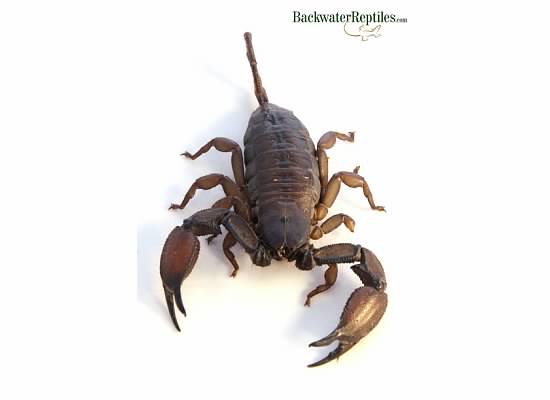
Meet the Flat Rock Scorpion (Hadogenes troglodytes), the longest scorpion in the world.
The Flat Rock Scorpion (Hadogenes troglodytes) is in fact the longest scorpion in the world. It might not qualify as the biggest in terms of overall body and limb size, but from pincer to tail tip, it is the longest. While it’s very common for the Flat Rock scorpion to be five to six inches long, it can actually can reach a length of up to eight inches!
Found only in Africa, this species of scorpion got its name from its body shape, which is long, flat, and segmented. This makes it ideal for squeezing into tiny crevices between rocks where it likes to make its home.
Here is a top view of the flat rock scorpion showing how flat and long its body shape really is.
Like all scorpions, the flat rock eats insects. In captivity, they should be fed crickets, roaches, and other appropriately-sized invertebrates. A small water dish should also be provided.
Because flat rock scorpions are ground-dwellers, their cage should have more horizontal space over vertical space. A substrate that mimics that of their natural environment, such as sand, is ideal, coupled with some rocks and hiding crevices.
These scorpions make good pets for both novices and experienced hobbyists due to the fact that they are overall fairly docile with a sting that is very low in toxicity. Although they can sting, they are slow (at least for a scorpion) and would generally rather hide than sting their handler.
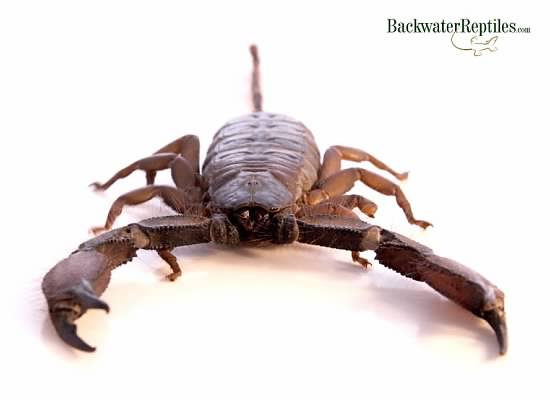
Even the pincer claws on the flat rock scorpion are flatter than the average scorpion’s claws.
Backwater Reptiles has flat rock scorpions for sale. If you’re lucky, maybe yours will grow to hold the next record for longest scorpion in the world!
If you’re wondering what the best pet snakes are for beginners, you’ve come to the right place. We’ve got decades of experience keeping and breeding reptiles of all sizes, and we’ve put together an easy-to-read list for you.
If you’re ready to add a snake to your family, or are buying one as a gift for someone else, but are unsure what species is most recommended, read on to find out which pet snakes we think are best for beginners.
4. Ball Python (Python regius)
Ball Pythons are the most popular pet pythons in the reptile world. They are bred to be available in many morphs ranging from the “normal” coloration to pure white. They are also very docile snakes that take to human handling well.
A juvenile ball python. This is a regular morph animal, but ball pythons are bred to be many different colors.
They’ll start out around ten inches in length and the females will max out at around three to five feet long. Males, on the other hand, will be slightly smaller at approximately three feet long. And they grow quickly!
We’ve put them at number four on our list because beginners will have to upgrade their python’s enclosure as it grows…or alternatively, start out with a cage that’s very large for the hatchling.
3. Boa Constrictor (Boa c. constrictor or Boa c. imperator)
There are actually two species of boa constrictor that are common in the reptile pet world. They look very similar, behave very similarly, and have nearly identical care requirements. In fact, we wrote a whole separate blog article about the differences between Columbian red-tail boas and Central American boas.
Here is a visual comparison of the two most common boa species in the pet trade. They are both extremely similar.
Both species of boa are great for beginners because of their easy-going temperaments and basic care requirements. Like all snakes, boas will eat mice – frozen/thawed being the preferred option. They will need a heat source and a light can be provided as well.
This is a boa eating a fuzzie.
They will grow to be around five to seven feet in length, although sometimes they can be longer. This means that they can start out with a home as simple as a plastic shoebox when young, but will need to have a larger home with lots of horizontal space as they mature and grow.
2. King Snake (Lampropeltis g. californiae)
We recommend king snakes for beginners because they are so wide spread in the wild. This means that they are very hardy snakes with adaptable living requirements and will generally do very well in captivity. They can even thrive in areas that receive yearly snowfall.
King snakes can be purchased from reptile breeders in a multitude of colorful morphs. If you’re interested in exploring king snake morphs in more depth, we have written an entire article on the most popular kingsnake morphs. There is pretty much a morph for all aesthetic preferences.
This is a chocolate morph king snake. There are many morphs to choose from.
King snakes will grow to be an average of three to four feet in length, although they can actually get over six feet long when fed well and given the space to grow.
Keep in mind that king snakes are rather “thin” snakes, unlike their bulkier python and boa cousins. This means that even though they might be the same length or longer than a boa or python, they will weigh significantly less and be easier to handle.
And the best pet snake for beginners is…
1. Corn Snake
The corn snake is our top snake for beginners because it’s a very well-rounded pet reptile. They come in a seemingly endless variety of morphs and color schemes (read our in-depth article on popular corn snake morphs), they’re well mannered and docile, they have simple care requirements, and are a hardy animal that will live a long life when provided with proper care.
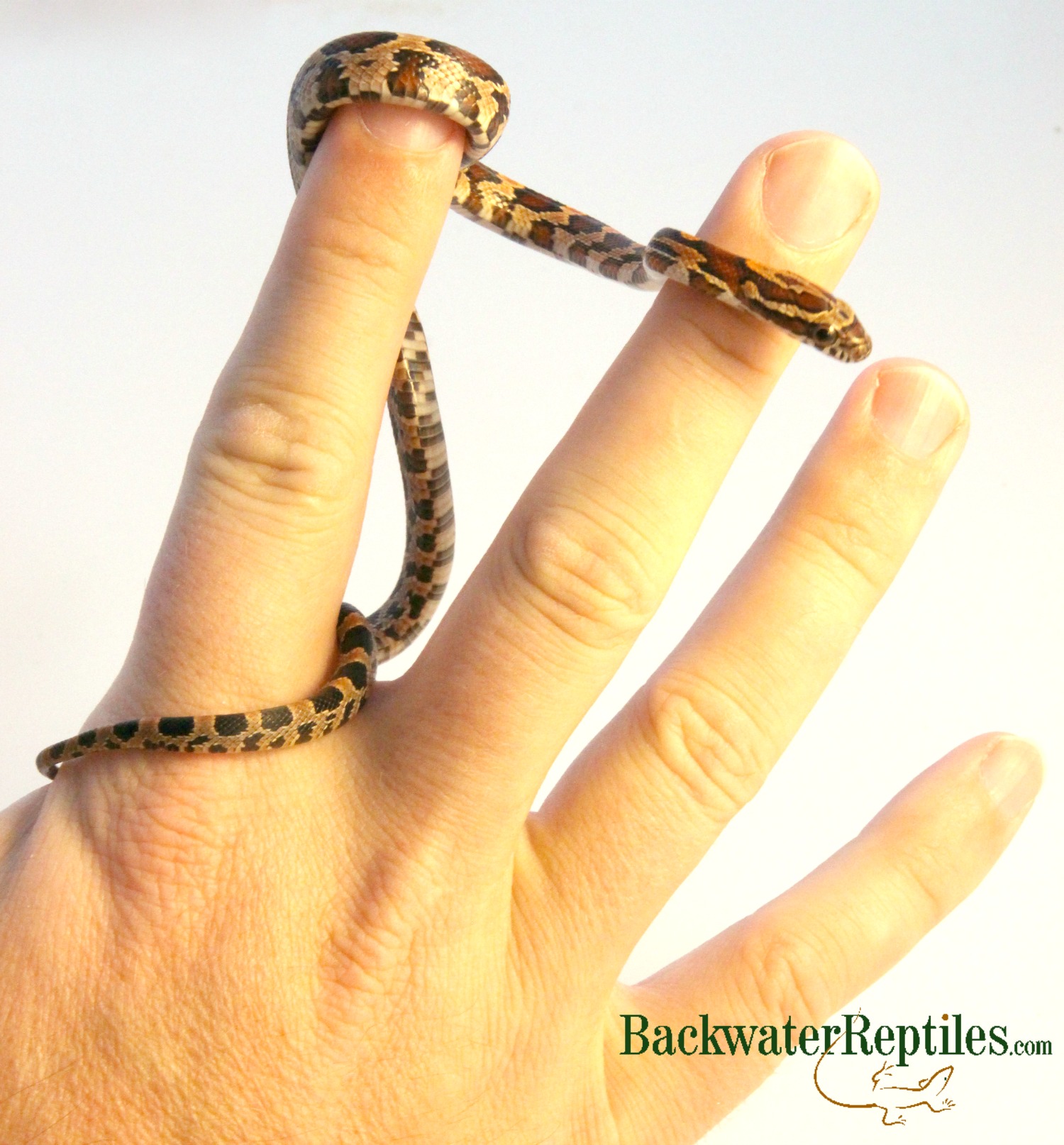
Corn snake hatchlings begin life at approximately eight to twelve inches long and will be around the diameter of a pencil. They are fast little snakes, but have really calm demeanors and are generally not nippy towards their handlers/owners. Hatchlings don’t need fancy enclosures – a plastic shoe box with a heat source, water dish, and a hide space will suffice.
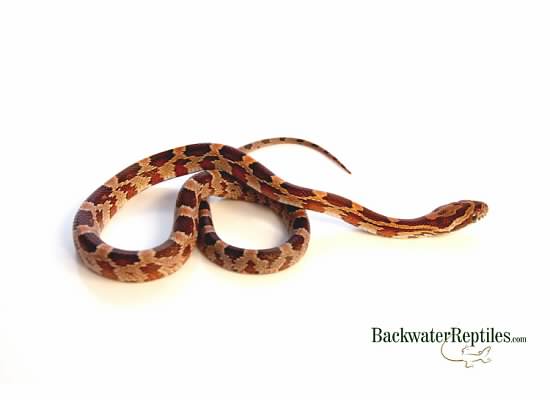
This is a normal morph corn snake, but these fun snakes are available in many different morphs.
As corn snakes grow, they do become escape artists (this is actually true of almost any species of snake) and so you will need to get a bigger enclosure with a secure lid. Adults around four to five feet long should have at least a twenty gallon tank to slither around in.
Conclusion
We hope you learned something from our list of the best pet snakes for beginners. Backwater Reptiles would absolutely recommend any of these species to a first-time snake owner.
Backwater Reptiles offers all of these species of snakes for sale on our website, so check us out today!
Wondering what to feed your Halloween crab? It might not seem like a crab would be a good pet, but hermit and Halloween Crabs are actually very common in the pet trade. Known for their colorful shells which are bright purple coupled with brilliant orange, Halloween crabs have simple care requirements and make low maintenance, easy-going pets.
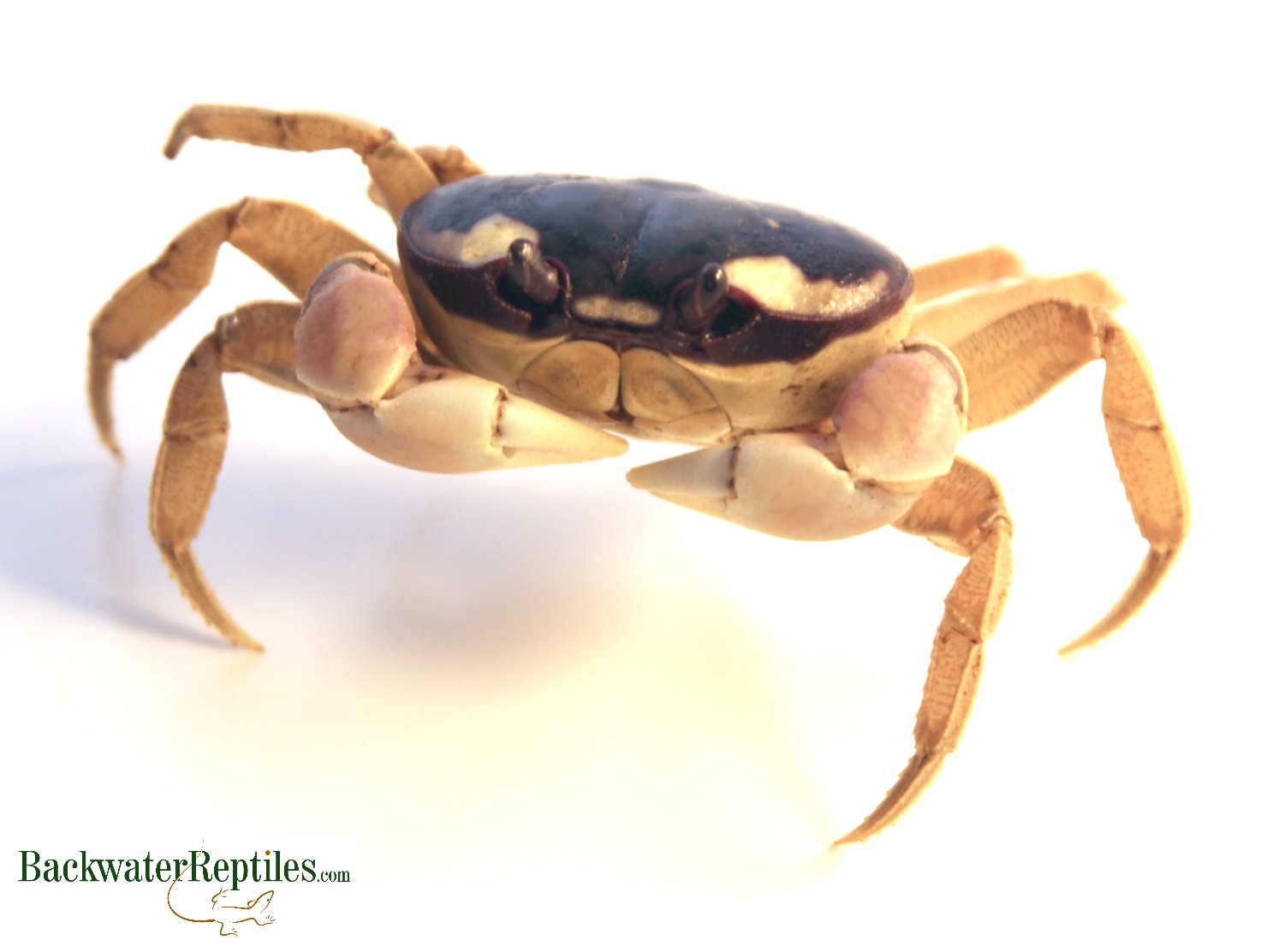
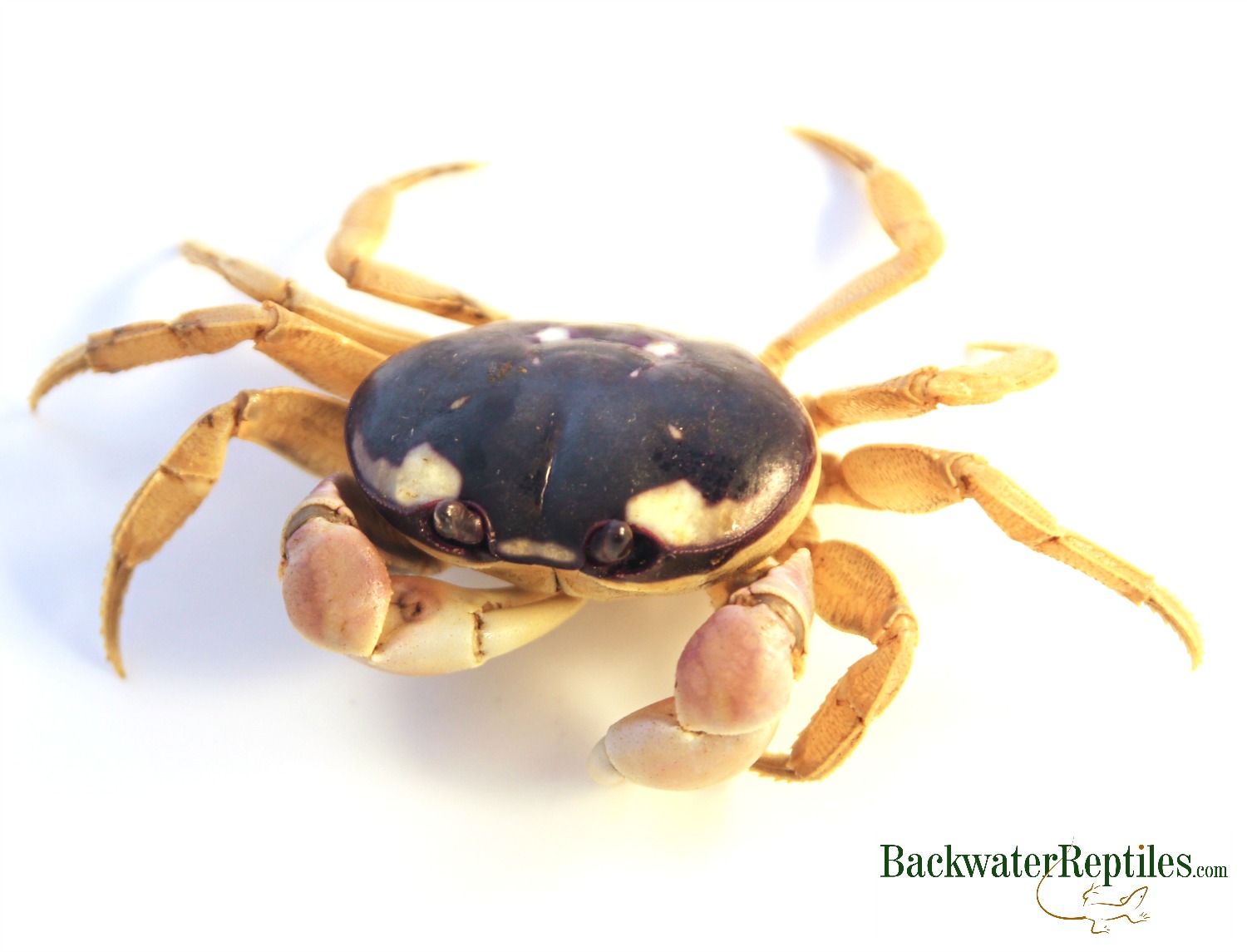
This Halloween Crab is not as bright and bold in coloration because it is probably a female.
So, now that you have your pet Halloween crab, you need to feed it. Well, you might be wondering, what exactly am I supposed to feed a crab? No worries – although Backwater Reptiles does specialize in reptiles and amphibians, we also keep invertebrates and we’ll tell you exactly what type of diet to feed your Halloween crab.
This Halloween crab is displaying its orange underbelly and purple claws, and is likely a male.
Halloween crabs come from the coasts of Mexico, Central America, and Peru. They are primarily rainforest dwellers who feed at night by scavenging the forest and beach floors. They actually spend most of their lives living on land, so believe it or not, they don’t need a “sea food” based diet.
What to feed your Halloween crab
You should primarily feed your Halloween crab foods that it would find in the wild. Because it is a tropical invertebrate, you can feed it fruits such as papaya, mango, and coconut. Be sure the fruit is cut into appropriately-sized pieces and that it is fresh because the crabs won’t eat spoiled or rotting fruit.
Top view of a female Halloween crab.
Vegetable matter of all types is acceptable food for Halloween crabs as well. They will even eat meat, but make sure that the meat is thoroughly cooked as it is dangerous to feed it to them raw.
Have you ever been overwhelmed by the number of available corn snake morphs nowadays?
All of them are hardy, selectively bred animals, but if you’re getting ready to purchase one of your own and you don’t know where to start, you might want to consider our list of the most popular corn snake morphs to help you out.
A collage of our top five corn snake morphs.
1. Normal Corn Snake
This morph is representative of the “classic” corn snake that you would actually be able to find in the wild, even though they are still captive bred animals.
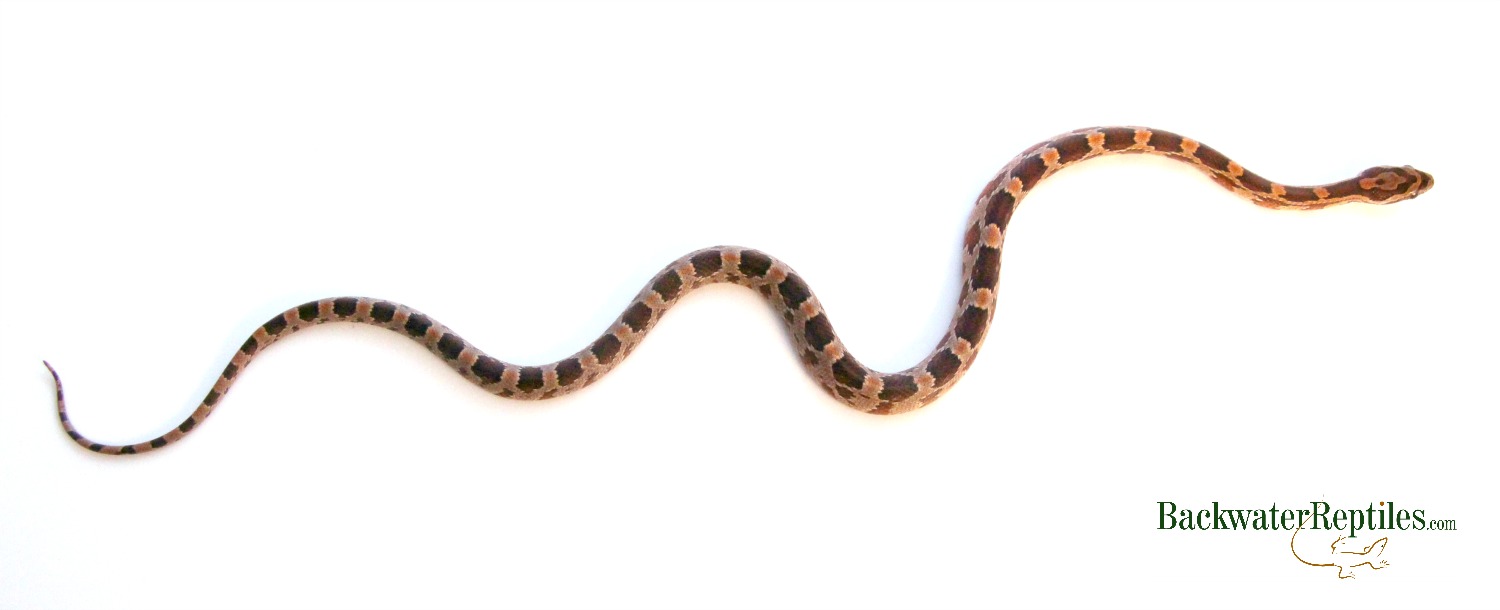
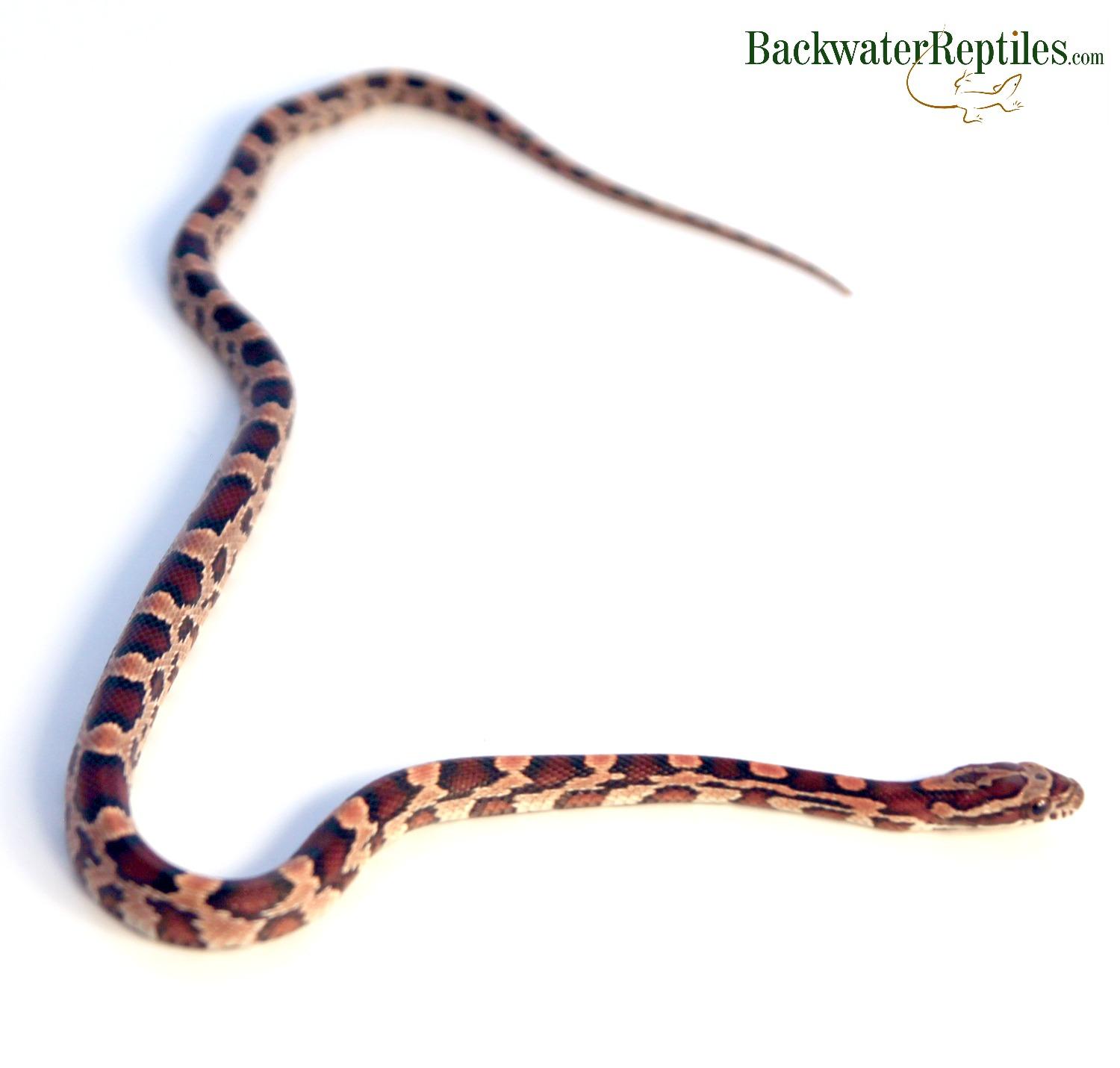
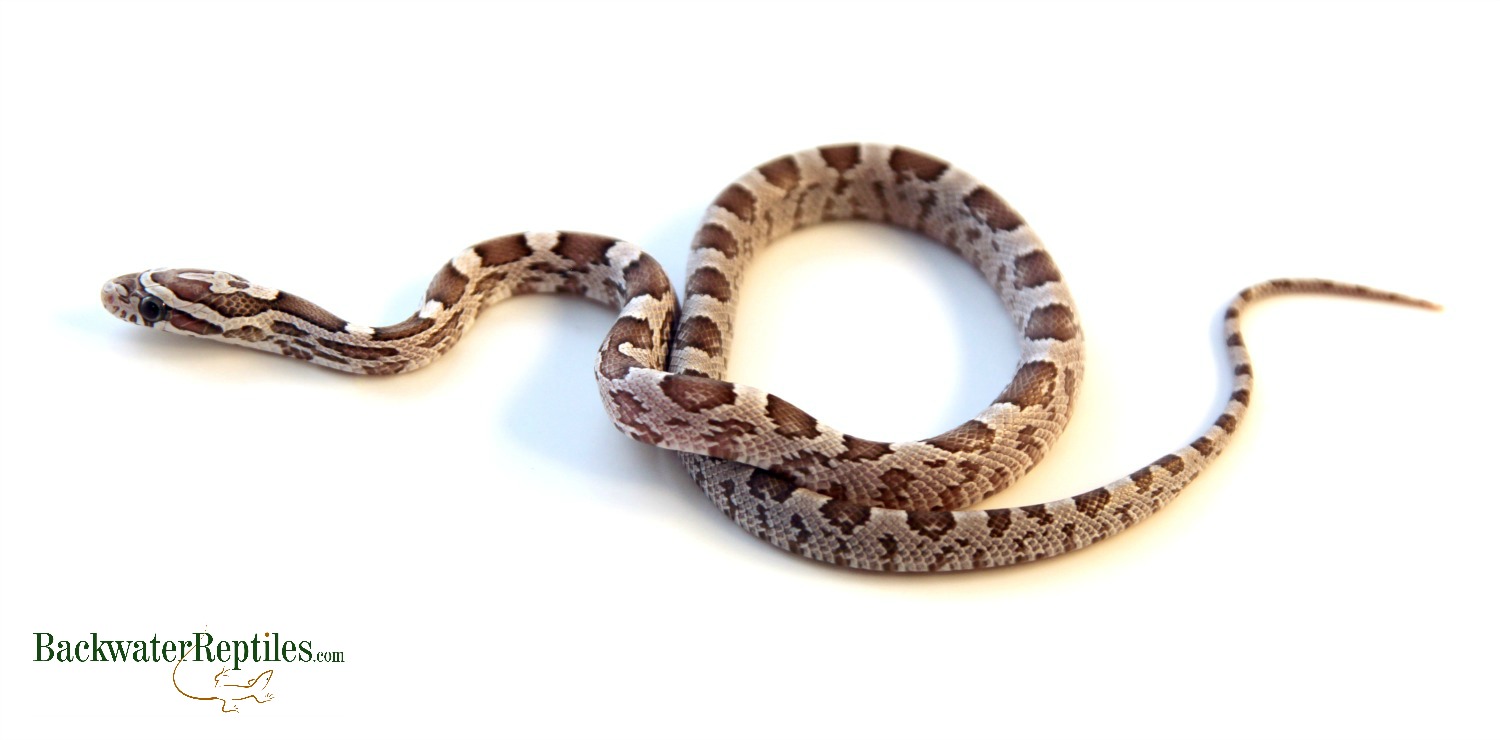
This is a top view of a normal corn snake. It’s base color is a brownish-orange and it has dark brownish red blotches with black outlines on its back.
Honestly, there is still quite a lot of variation in the normals, whether that be in their coloration or markings. However, generally, normals are orange or brownish yellow with with large, red blotches down their backs that are ringed in black. Hatchlings are also duller in coloration than their adult counterparts.
2. Blood Red Corn Snake
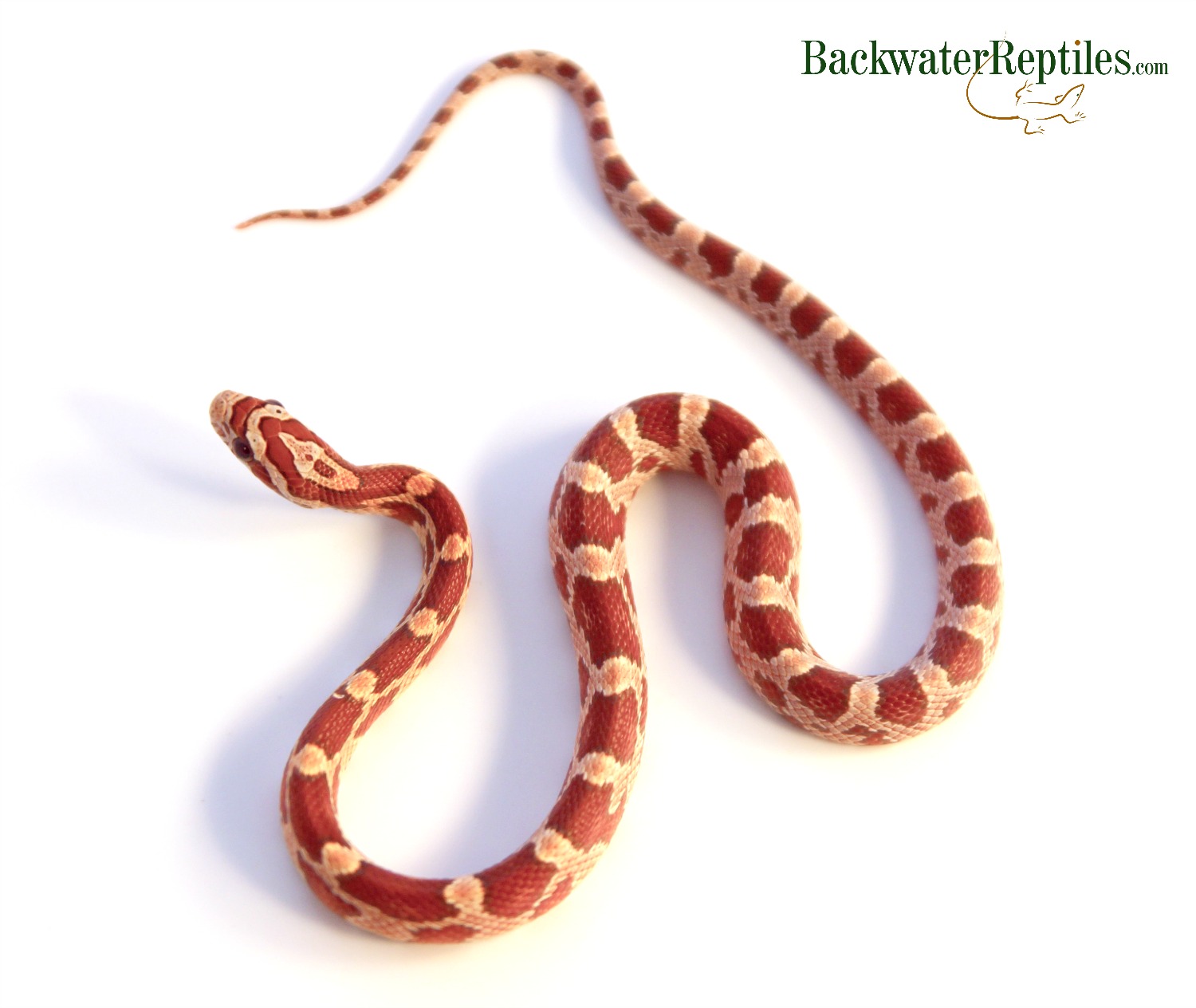
This morph is very brightly colored. They exhibit a bold, red hue with darker red patches along their backs. They will tend to lose the black outlines around the patches on their back, but this is not always the case.
This morph also loses the checkered pattern on their belly scales.
This hatchling is getting ready to shed, which is why his eyes look a bit grey.
3. Okeetee Corn Snake
This morph, which is also called Abbott’s Okeetee Corn Snake, are known for their thick, black borders on their back splotches as well as very vibrant coloration in general. Because these dark black borders boldly mark and separate the main scale color from the splotches, many hobbyists consider Okeetees to be an “ideal” representation of the corn snake.
This is a hatchling Okeetee morph corn snake. They start out very small but can grow up to 5.5 feet in length.
Fun fact: This morph got its name from the Okeetee Hunt Club in Jasper County, South Carolina. This is the area of the U.S. where the snake’s wild breeding stock originated from.
The Okeetee morph corn snake is bred to have very dark black rings around the snake’s back markings.
4. Anerythristic Corn Snake
Anerythristic corn snakes lack all red pigment, which means that their scales are combinations of white, black, and grey with some hints of brown. Some anerys also will develop yellowing around the jawline.
There is no red or pink pigment present in this anerythristic morph corn snake.
5. Hypomelanistic Corn Snake
This morph is most easily explained by going into the etymology of the morph’s name itself. “Hypo” means a lack of something, while “melanin” is the pigment in hair, skin, scales, etcetera that causes dark or black coloration. Therefore, a hypomelanistic corn snake would lack dark or black pigment.
Notice how this hypomelanistic corn snake has no black outlines on its back markings.
This is evident when you see a hypo corn snake as it’s back blotches that are normally outlined in black will lack this definitive outline.
6. Albino Corn Snake
Albino animals lack melanin, which is the pigment responsible for producing dark coloration in animals’ skin, hair, nails, scales, etc.
Albino corn snakes like this one, will have red eyes and lack dark pigment.
Albinism in corn snakes means that the animal will be any combination of pink, orange, white, red, or yellow. The only thing that is certain is that the snake will not have any dark brown or black pigmentation.
Side note: This morph of corn snake is also referred to as “amelanistic” due to the compete lack of melanin that is characteristic of albinism.
Conclusion
All corn snakes make great pet snakes due to their docile demeanor, manageable size, and simple care requirements. Potential corn snake owners do have a lot of choice when it comes to coloration and markings due to the vast number of morphs available today. Backwater Reptiles has many corn snake morphs for sale, but our top five morphs are listed above.
You might want to know what gender your panther chameleon (Furcifer pardalis) is for many reasons. Maybe you want to begin a breeding project. Perhaps you got a new family pet and you are trying to decide on a name. Or maybe, you’re just plain old curious.
Never fear – at Backwater Reptiles, we breed, feed, handle, and care for Panther chameleons on a daily basis, and we’re prepared to help you be able to tell if your Panther is a lady or a gent.
Color
The biggest indicator of adult Panther chameleon gender is color. In the wild, juvenile and adult males use brilliant colors to attract mates as well as defend territory against rival males, so bright, bold colors are the number one indicator that you have a male chameleon.
Blues, greens, and deep reds are all colors that are primarily displayed by adult males. Females on the other hand, tend to be duller and will usually be peach, pinkish, tan, grey, or brown in tone.
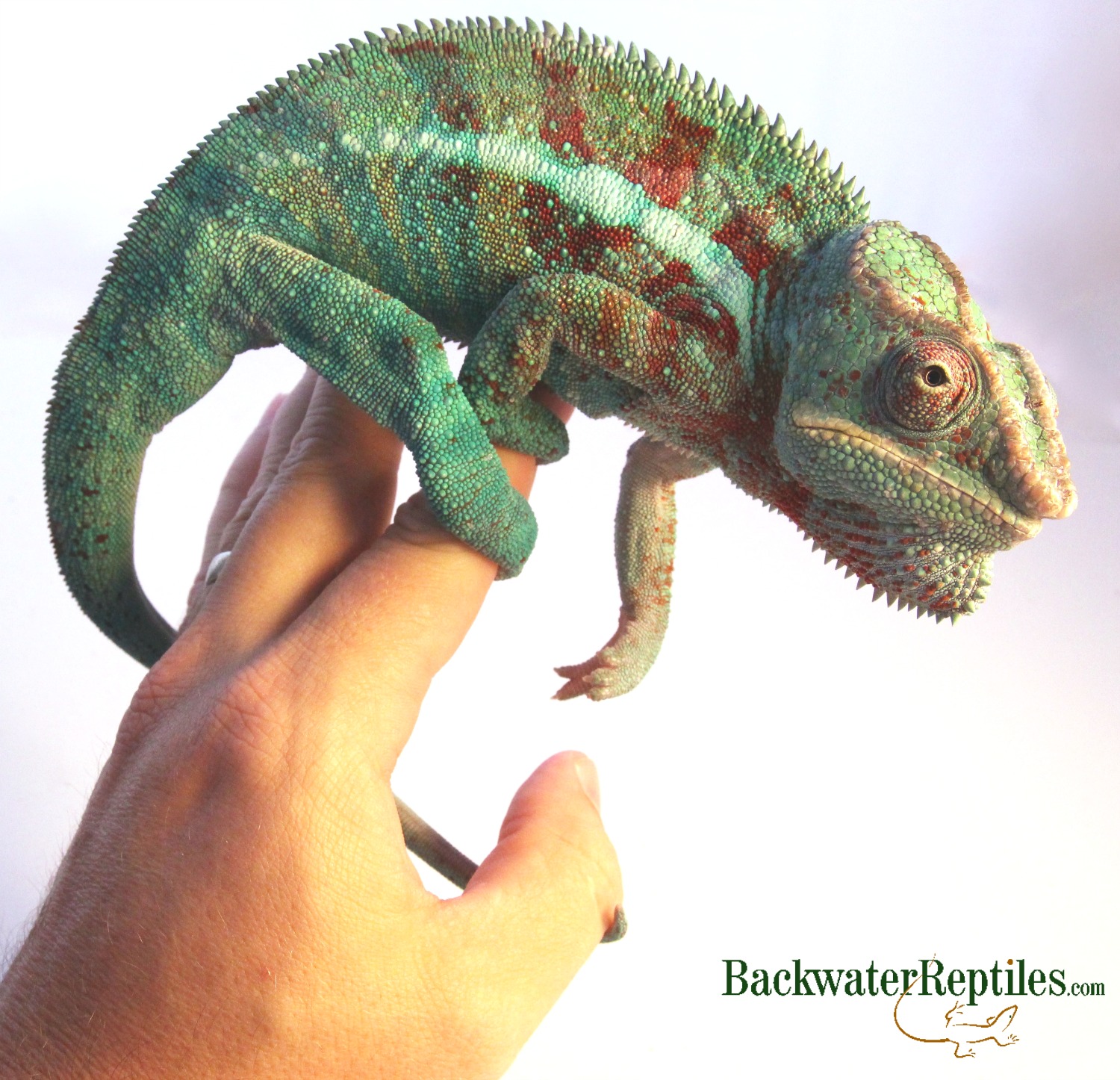
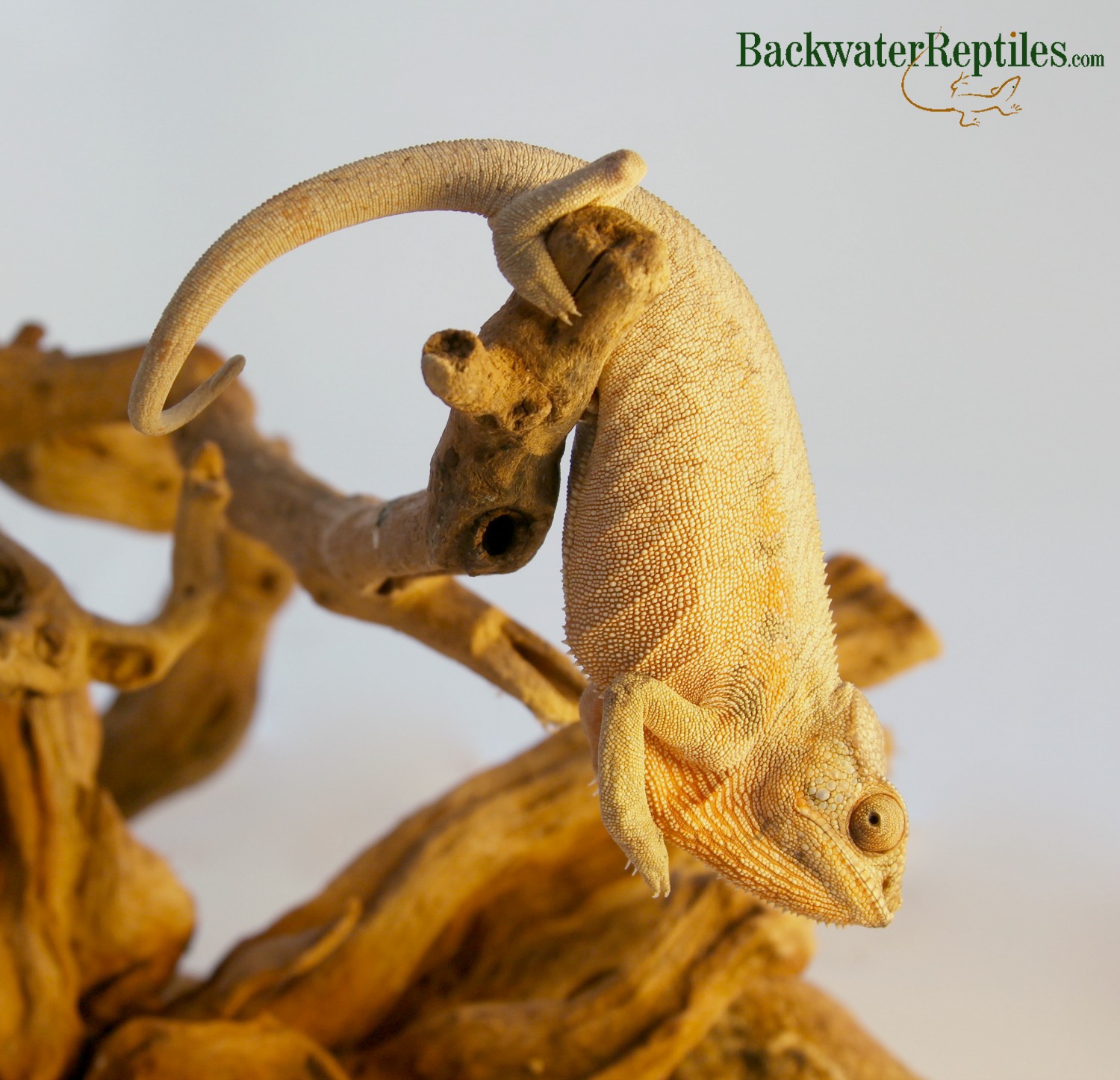
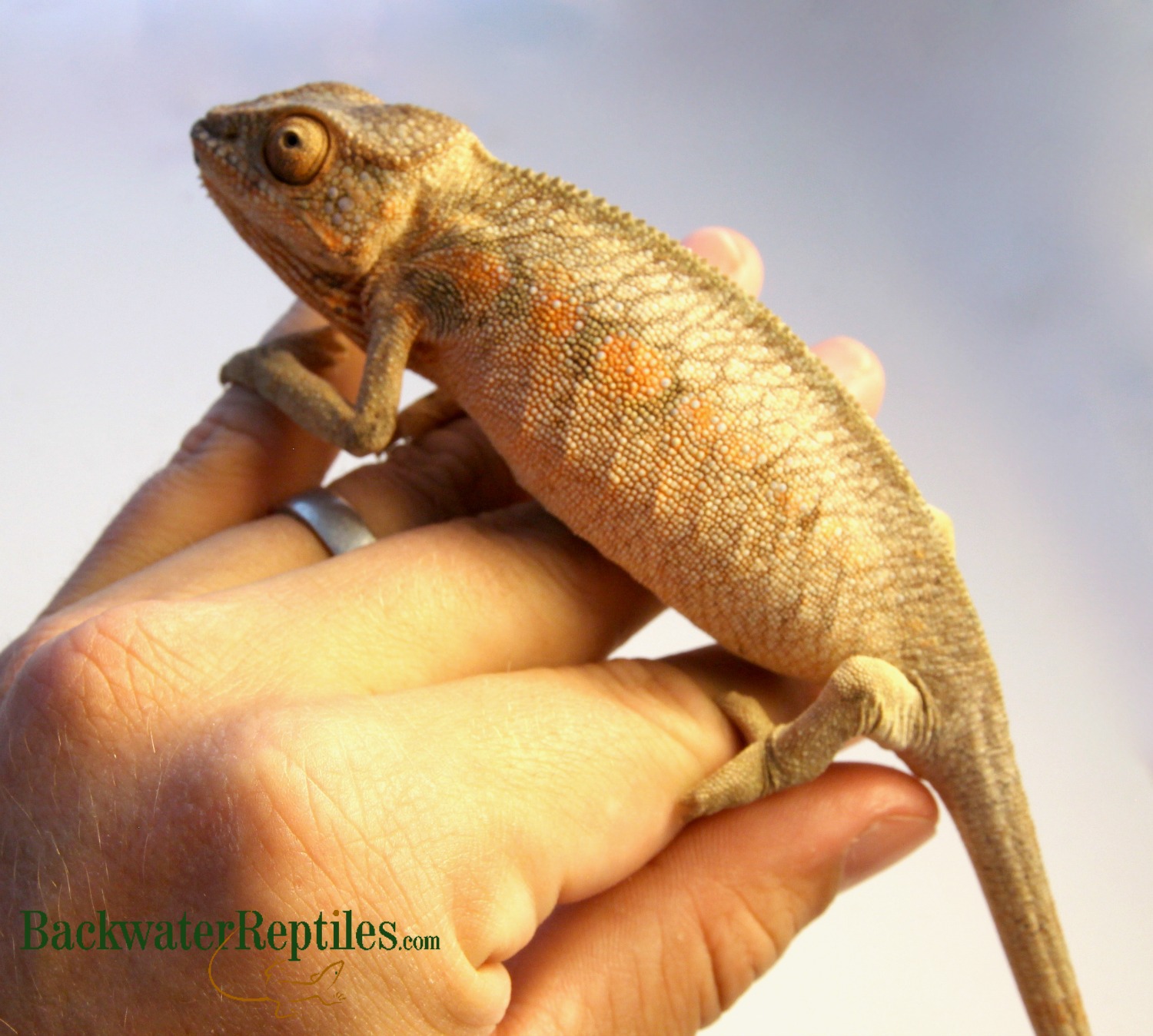
This is an adult, male Panther chameleon. He is very colorful, displaying brilliant blues, greens, reds, and whites.Here is an adult female Panther chameleon. She is very brownish, peach in color with a hint of an orange stripe on her side. What a stark contrast to her male counterpart!
Tails
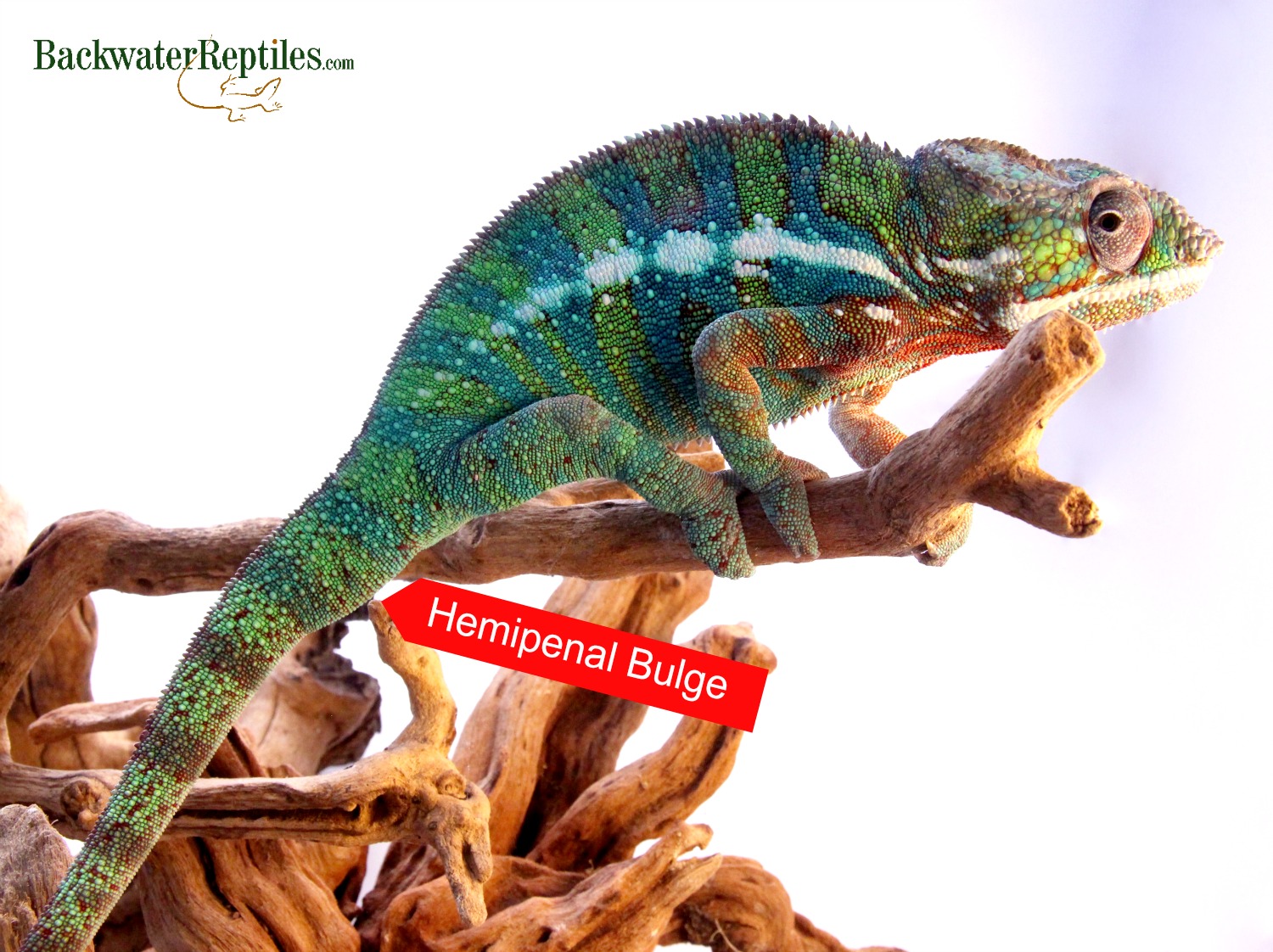
Although male chameleons don’t have external genitalia like mammals do, they do still have a trait that distinguishes them from females called the hemipenal bulge. The hemipenal bulge is a natural bulge at the base of the male’s tail where his reproductive organs are located.
The red arrow is pointing to the male’s hemipenal bulge, which is noticeable from a young age, but does grow as the chameleon matures.
This trait is noticeable very early on in the chameleon’s life cycle. At even a young age, male Panthers have fatter and thicker tails bases than females. The females will actually have a small indent where the cloaca is located at the base of the tail.
Rostral Process (AKA Nose Ridge or Bump)
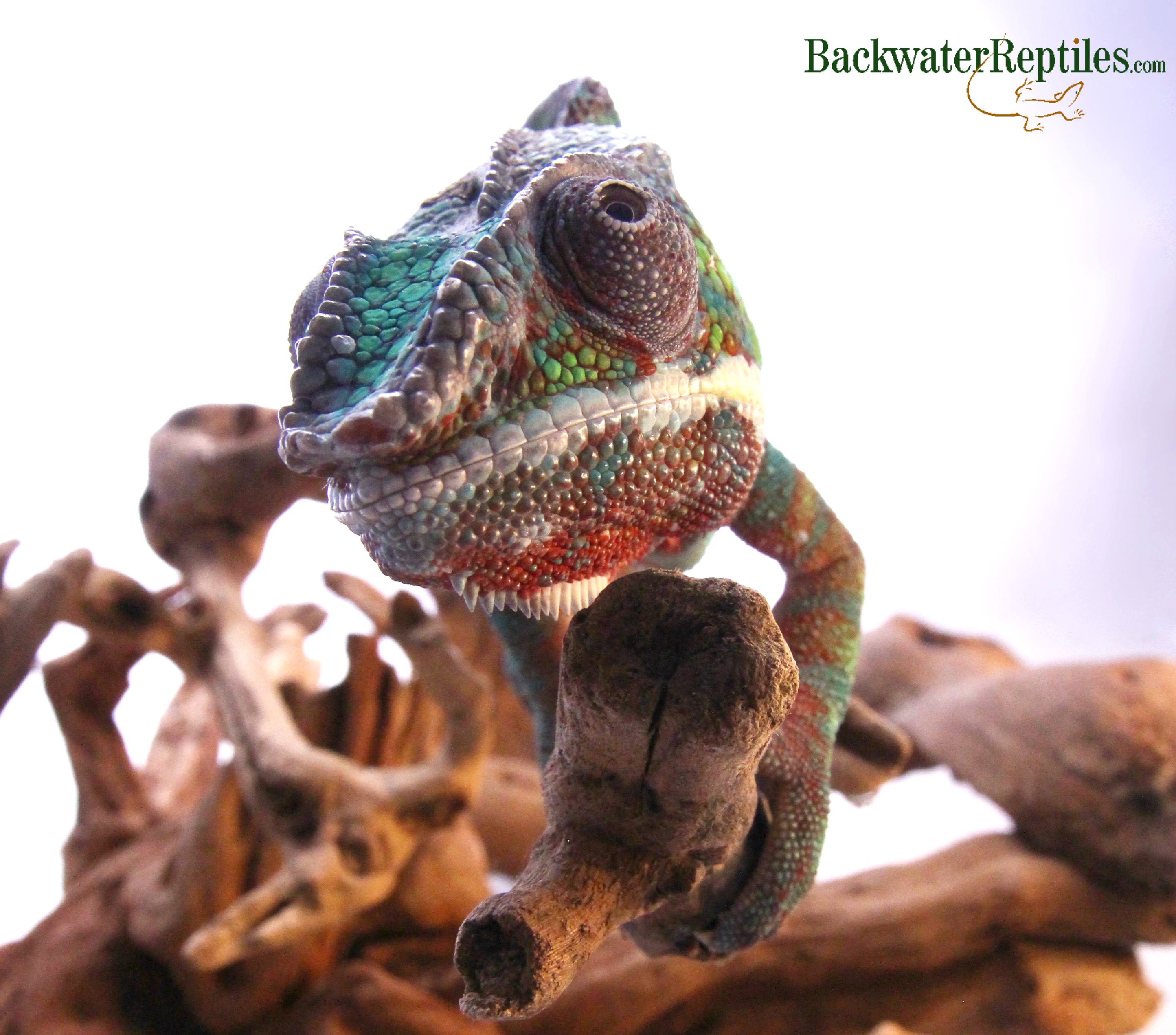
Once the males have grown a bit, they will begin to develop a ridge or bump on their nose that extends along back to both eyes. This will become quite large and pronounced as the males become fully mature.
Females on the other hand, might develop very tiny rostral processes, but they will always stay small, especially when compared to that of a male.
Here’s a close up view of a male Panther chameleon’s rostral process. This ridge that forms a bulbous sort of “nose” on the males can be present in females, but will be much smaller.
Size
Full grown male Panther chameleons will grow to be anywhere from twelve to eighteen inches long. Females will be smaller – anywhere from ten to fourteen inches long.
This photo shows an adult female Panther being handled.
Males are also heftier and bulkier than females in general. Their tails will not only have bulges, but will be thicker in overall girth when compared with a female’s.
Conclusion
Sexing a baby Panther chameleon can be tricky. It’s best to wait at least a month or month and a half sometimes when determining gender. But if you are dealing with adult Panthers, the process is much easier as males and females are very different in terms of size, color, and even morphology to a certain extent.
If you are interested in owning your very own Panther chameleon, Backwater Reptiles offers both male and female Panther chameleons for sale. We also have a very informative blog article detailing how to breed Panther chameleons if you are interested in producing some cute little babies of your own.