Fire Bellied Toad Care (Bombina orientalis)

Wondering how to care for your Fire-bellied toad? Although they are commonly called “toads,” they are in fact, frogs. They make excellent pets, particularly for first time amphibian owners and we highly recommend them to herpers of all ages and experience levels.

If you’re wondering how to care for this colorful frog, simply read on as we’ve devoted this article to discussing their care requirements in captivity.

Fire Bellied Toad Care Sheet

Fire Belled Toad Description

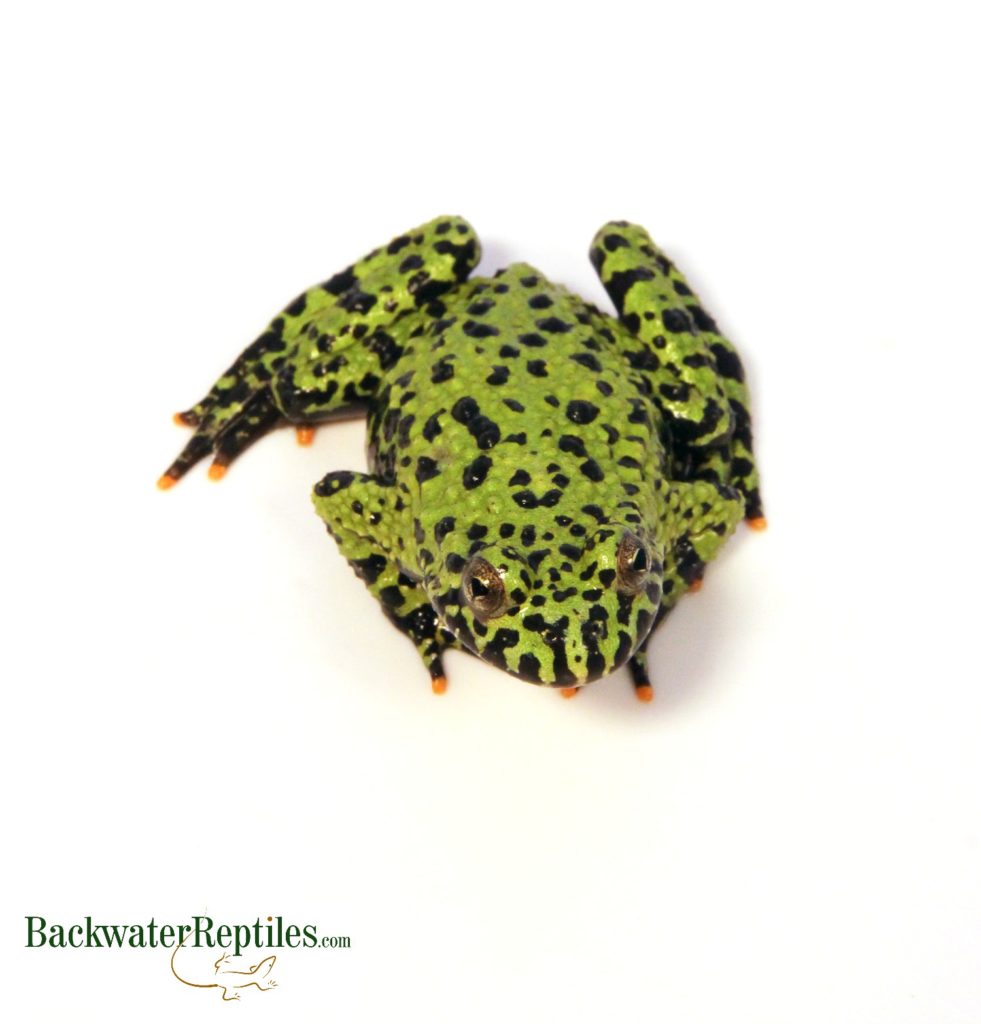
The fire bellied toad, which should probably actually be named the “fire bellied frog” gets its common name from its hard to miss red belly speckled with black spots. This red tummy is meant as a warning to potential predators that the frog is toxic and shouldn’t be eaten, although this toxin is so mild that humans don’t have a reaction to it. The frog’s back is also a very bright colored green covered with black splotches and spots. Fire bellied toads are quite striking little amphibians.
fire bellied toad care
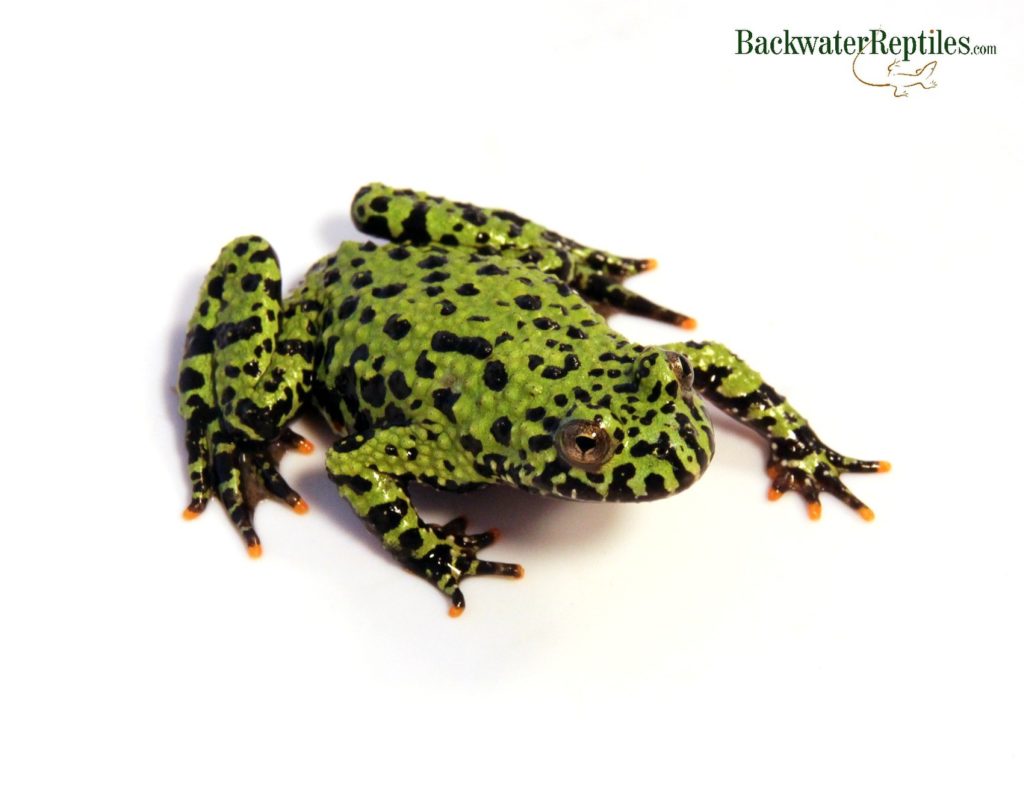
Fire bellied toads have green dorsal sides with black spots and bright red undersides with black spots. We’ll describe in detail how to care for this species.

Fire bellies are small frogs which makes them ideal for pet owners who have limited space. A mature frog will usually get to be between one and two inches long. They have average life spans of anywhere from seven to fifteen years in captivity.

Unlike many frog species, fire bellies are diurnal and therefore awake and active during the day. This means that as a pet owner, you actually get to see your frog go about its every day activities. It’s especially nice to not have to wait for the sun to go down to hear your frog’s calls or to watch it eat.

Fire Bellied Toad Habitat

As we’ve already mentioned, fire bellied toads are actually frogs and therefore require a more aquatic habitat. A typical enclosure for a fire belly should actually be half aquatic. Most owners will set up a tank that has water in half with a slope of substrate that terminates in a solid ground area. This is because fire bellied toads are extremely happy when they can float in water with their back legs and toes just barely touching something solid underneath.

These small frogs don’t require a lot of space to be happy. You can comfortably house up to three fire bellies in a ten gallon aquarium and up to six in a twenty gallon tank.
fire bellied toad
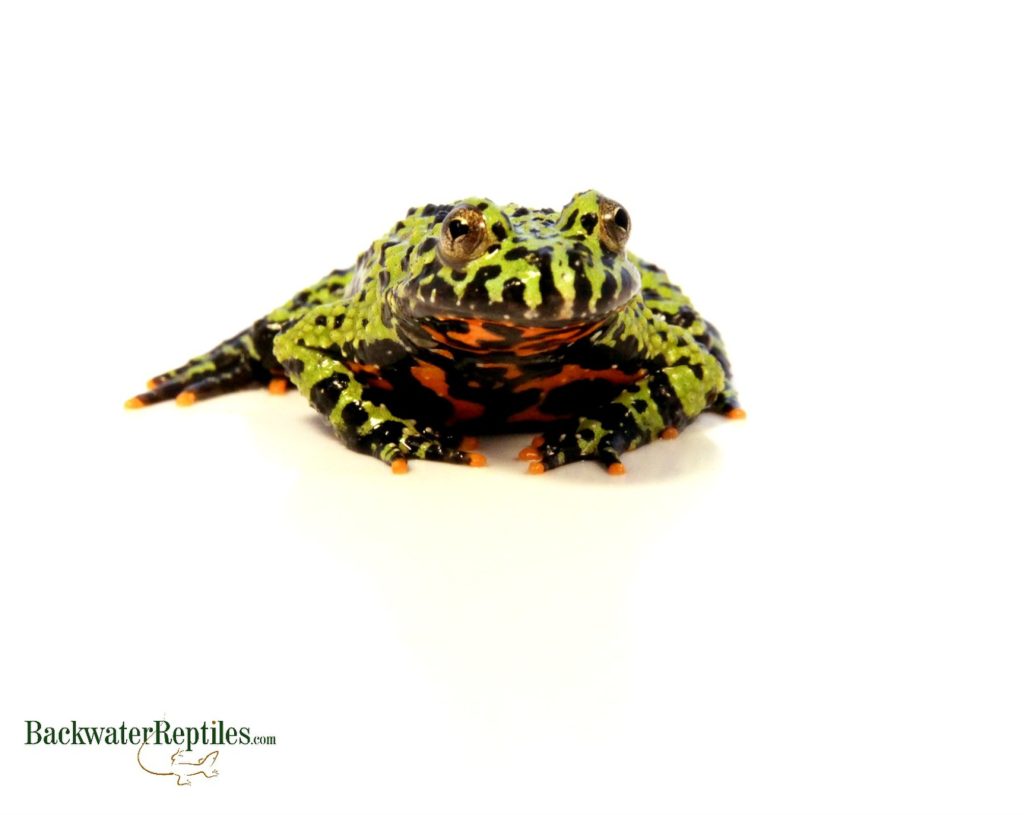
This photo shows off the red and black underside of the fire bellied toad.

It’s not necessary to provide a basking area for fire bellied toads. However, you will want to maintain a reasonable ambient temperature. During the day, the tank should be kept at 70 to 75 degrees Fahrenheit and at night, the tank can drop to 60 to 68 degrees. You should monitor the temperature with a heat gun, which is a tool that every reptile or amphibian owner needs to keep handy.

Fire Bellied Toad Feeding

Despite their small size, fire bellied toads have rather fierce appetites. They are ambush predators and will lunge at any sign of movement that involves an item they think will fit in their mouth.

Fire bellied toads will readily consume virtually any insect. At Backwater Reptiles, our frogs are offered a staple diet of vitamin dusted crickets combined with aquatic worms. We supplement with small larvae and even cut up earth worms. Fire bellied toads will see virtually any invertebrate as food so long as they detect movement.

Fire Bellied Toad Temperament

Even though their red bellies scream “toxic” to potential predators, owners of fire bellied toads need not be concerned. The toxin produced by the frog is not harmful to people. So as long as you wash your hands after touching the frog and don’t put your fingers in your mouth after handling, the frog’s toxin is harmless.

Fire bellied toads are not at all aggressive towards people. However, we should say that being held is not one of their favorite activities. They won’t object much to being held aside from a little bit of squirming, but it’s best for all parties involved if you mostly allow your frog to be seen and not touched.
bombina orientalis
Fire bellied toads make awesome pets for beginning herp hobbyists and experienced reptile parents alike.

Conclusion

We’ve seen experienced herp hobbyists dismiss fire bellied toads as “common” pets simply because they are so widely available.If this species was rare, it would be one of the most sought-after amphibians in the world.

We hope you’ve enjoyed reading our Fire bellied toad care sheet. We think that these cute little frogs are excellent pets for beginners and experts alike. Ready for a fire bellied toad of your own? Backwater Reptiles has got you covered!
 

Most Popular Poisonous or Venomous Pets

Not everyone is intimidated or afraid of keeping a venomous or poisonous exotic pet. In fact, many people feel exactly the opposite. They love showing off their scorpions, spiders, and other critters to friends and family alike.

In this article, we’ll list the most popular venomous or poisonous pets sold at Backwater Reptiles.

Most Popular Poisonous or Venomous Pets

Mexican Redknee Tarantula (Brachypelma smithi)

Mexican redknee tarantulas are a very docile and calm species of spider, which makes them very popular pets. If you want a pet spider that you can interact with safely, our recommendation would be a Mexican redknee.

As far as temperament is concerned, Mexican redknees would much rather run away from you than be aggressive towards you. In most cases, you’d be hard-pressed to get one to bite you and inject you with venom. This spider’s preferred defense mechanism is actually to brush its irritating urticating hairs on you. However, we’d like to mention that even if a redknee did happen to bite you, its venom is not fatal and it’s been said that the pain it causes is equivalent to a bee or wasp sting.

most popular poisonous/venomous pets
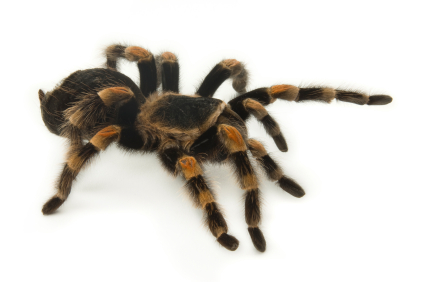
Mexican redknee tarantulas are known for the docile temperaments and orange legs, although they are venomous.

Mexican redknee tarantulas are excellent pets for first time spider owners. They eat crickets, meal worms, roaches, and other insects and it’s always fascinating to watch them undergo the molting process. They are especially great animals to keep in kids’ classrooms, although we don’t necessarily recommend the children handle the spider without supervision.

If you are ready to become a parent to a Mexican redknee tarantula, Backwater Reptiles has got you covered!
Asian Forest Scorpion (Heterometrus longimanus)

Asian forest scorpions are fairly large scorpions with stocky builds, black or very dark brown bodies, and somewhat defensive personalities. They will grow to be approximately four to five inches in length and can live up to seven years in captivity.

Although they are not as large as their cousin the Emperor scorpion, Asian forest scorpions do look very similar and many people often confuse the two species.

asian forest scorpion
It is certainly possible to hold your Asian forest scorpion when you do so with care and proper technique.

As far as temperament is concerned, if you want a docile invertebrate, an Asian forest scorpion might not be the best choice for you. These scorpions are not known for being overly aggressive, but at the same time, they are not hesitant to sting if provoked.

Asian forest scorpions are not known to be especially toxic to people if you do happen to be stung, but their sting is certainly painful. We recommend handling your scorpion only if you are experienced at reading their behavior and are confident in your capabilities as a scorpion wrangler.

Backwater Reptiles has baby Asian forest scorpions and full-grown scorpions for sale at very affordable prices.

Strawberry Poison Dart Frog (Dendrobates pumilio)

We’ve put the Strawberry dart frog on our list, however in truth, we have to say that this species of dart frog, and all species of dart frog for that matter, are actually not poisonous when kept in captivity.

In the wild, poison dart frog are able to ingest insects and other food sources that allow them to produce their special namesake toxin. They secrete this toxin through their skin and it protects them from predators. However, because captive dart frogs are fed a speciality diet of gut-loaded insects, they are unable to produce this toxin.

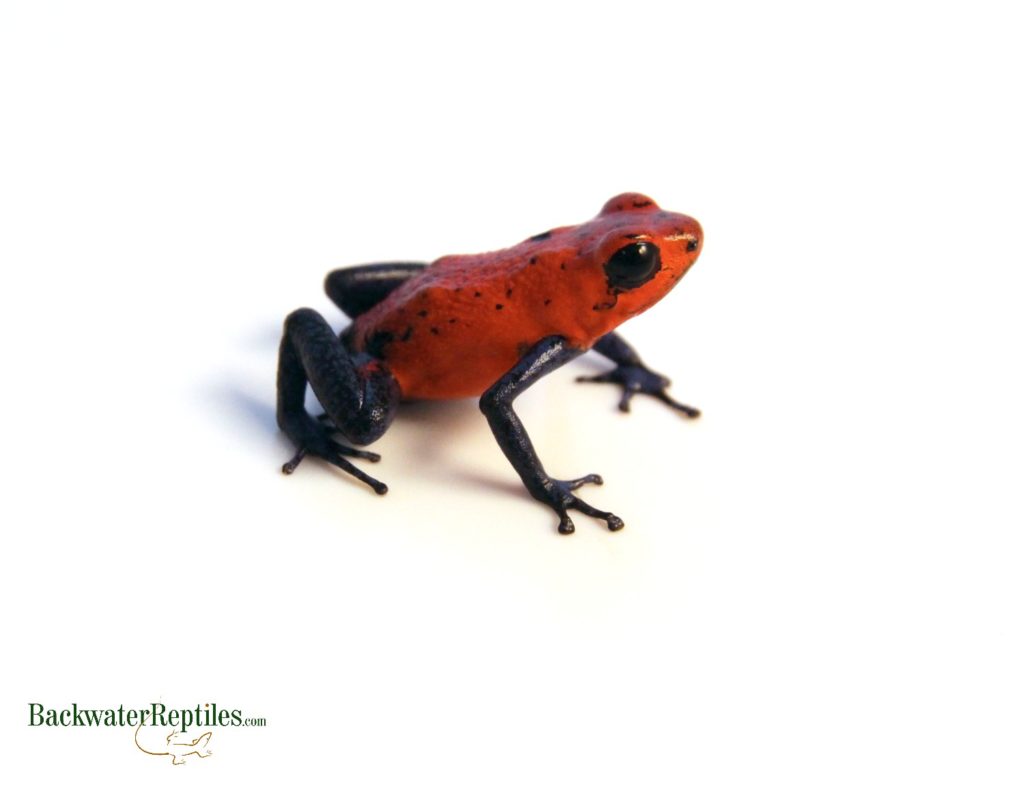
strawberry poison dart frog
Strawberry poison dart frogs are known for their red and blue/black two-tone color combo. However, poison dart frogs are actually available in many different color schemes.

This means that although poison dart frogs might seem intimidating to people who don’t know better, in reality, they are just really colorful little frogs who make great pets. We’re huge fans of them because their habitats don’t take up a lot of space!

If you are interested in a tiny, boldly colored pet frog, we recommend purchasing a strawberry dart frog. There are also many other colors of poison dart frogs on the market that have the same care requirements.

Conclusion – Most Popular Poisonous or Venomous Pets

Although each of the animals on this list is technically venomous or poisonous, we think they are also misunderstood.

With proper care and proper technique, even stinging invertebrates like scorpions can be picked up and handled. Just make sure that you are aware of the dangers associated with this practice and also be aware that it can cause the animal stress if you do it incorrectly.